Co-editors-in-chief: Caroline Clason, Chris Derksen, Christian Haas, Christian Hauck, Nanna Bjørnholt Karlsson & Hanna Lee
The Cryosphere (TC) is a not-for-profit international scientific journal dedicated to the publication and discussion of research articles, short communications, and review papers on all aspects of frozen water and frozen ground on Earth and on other planetary bodies.
The main subject areas are ice sheets and glaciers, permafrost, river and lake ice, seasonal snow cover, and sea ice, including remote sensing, numerical modeling, in situ, and laboratory approaches, and studies of the interaction of the cryosphere with the Earth system. Manuscripts with a focus on cryospheric research that include perspectives from social science, humanities, and other disciplines outside the natural sciences are also welcome.
Journal metrics
TC is indexed in the Web of Science, Scopus, Google Scholar, etc. We refrain from displaying the journal metrics prominently on the landing page since citation metrics used in isolation do not describe importance, impact, or quality of a journal. However, these metrics can be found on the journal metrics page.
News
30 Apr 2026
Greek mountain snow cover halved in past four decades due to regional warming
The authors' research shows that Greece's highest mountains have lost half of their winter snow over the past four decades. Using a new model that reconstructs daily snow cover from satellite and climate data, they found a rapid and widespread decline driven mainly by rising temperatures. Please read more. 
30 Apr 2026
Greek mountain snow cover halved in past four decades due to regional warming
The authors' research shows that Greece's highest mountains have lost half of their winter snow over the past four decades. Using a new model that reconstructs daily snow cover from satellite and climate data, they found a rapid and widespread decline driven mainly by rising temperatures. Please read more.
09 Oct 2026
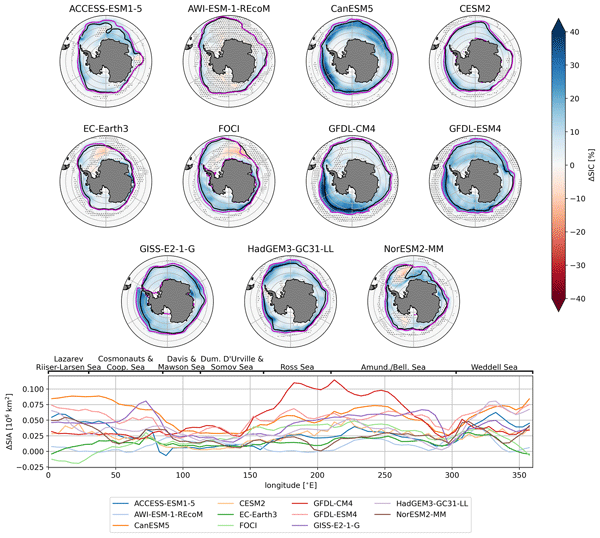
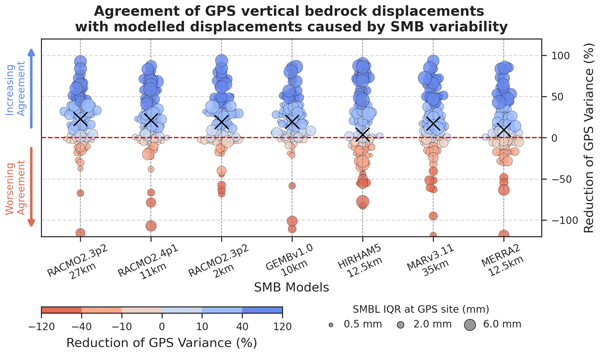
Antarctic sea ice response to meltwater due to Antarctic ice sheet mass loss in a multi-model ensemble
Andrew G. Pauling, Inga J. Smith, Torge Martin, Jeff K. Ridley, David P. Stevens, Max Thomas, Rebecca L. Beadling, Christopher Danek, Tore Hattermann, Qian Li, John Marshall, Morven Muilwijk, Ariaan Purich, and Neil C. Swart
The Cryosphere, 20, 5761–5783, https://doi.org/10.5194/tc-20-5761-2026,https://doi.org/10.5194/tc-20-5761-2026, 2026
Short summary
08 Oct 2026
An ensemble reconstruction of Greenland ice sheet surface elevation for 1850 and 1980
Ana Carolina Moraes Luzardi, Sophie Nowicki, Beata Csatho, Jason Briner, Mohammad Salmani, Hui Gao, Denis Felikson, Josh Cuzzone, and Kristin Poinar
EGUsphere, https://doi.org/10.5194/egusphere-2026-5841,https://doi.org/10.5194/egusphere-2026-5841, 2026
Preprint under review for TC (discussion: open, 0 comments)
Short summary
06 Oct 2026
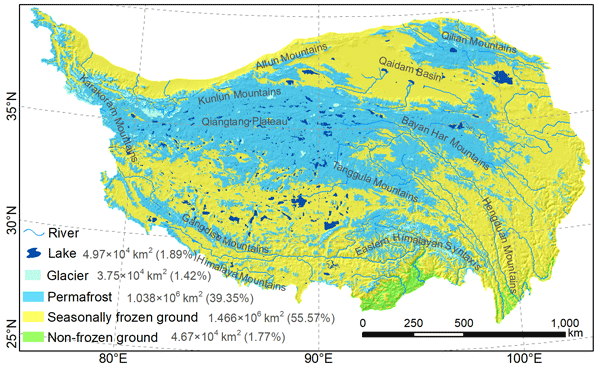
A 2020 permafrost distribution map of the Qinghai-Tibet Plateau
Yuhong Chen, Zhuotong Nan, Wenbiao Tian, Yi Zhao, Shuping Zhao, Dongkai Yang, Guifei Jing, and Fujun Niu
The Cryosphere, 20, 5697–5723, https://doi.org/10.5194/tc-20-5697-2026,https://doi.org/10.5194/tc-20-5697-2026, 2026
Short summary
Highlight articles
13 Jul 2026
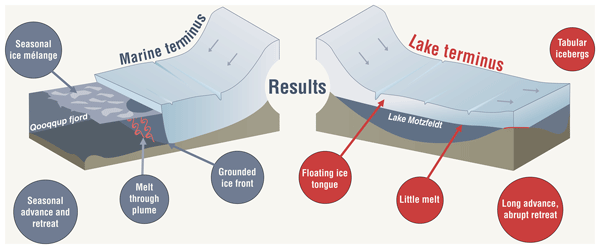
Contrasting dynamics of lake- and marine-terminating glaciers under same climatic conditions
Florian Vacek, Faezeh M. Nick, Douglas Benn, Maarten P. A. Zwarts, Walter Immerzeel, and Roderik S. W. van de Wal
The Cryosphere, 20, 3827–3845, https://doi.org/10.5194/tc-20-3827-2026,https://doi.org/10.5194/tc-20-3827-2026, 2026
Short summary
01 Jul 2026
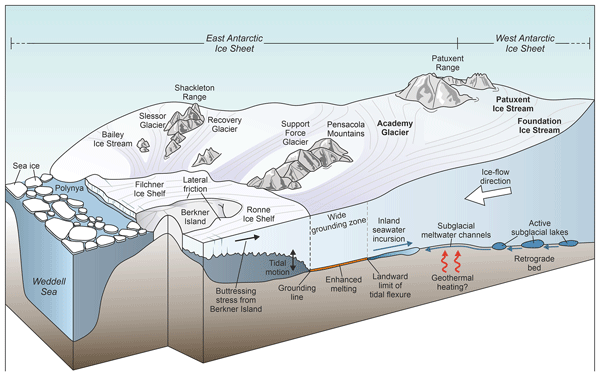
Review article: The Foundation-Patuxent-Academy ice stream system, Antarctica
Neil Ross, Rebecca J. Sanderson, Bernd Kulessa, Martin Siegert, Guy J. G. Paxman, Keir A. Nichols, Matthew R. Siegfried, Stewart S. R. Jamieson, Michael J. Bentley, Tom A. Jordan, Christine L. Batchelor, David Small, Olaf Eisen, Kate Winter, Robert G. Bingham, S. Louise Callard, Rachel Carr, Christine F. Dow, Helen A. Fricker, Emily Hill, Benjamin H. Hills, Coen Hofstede, Hafeez Jeofry, Felipe Napoleoni, and Wilson Sauthoff
The Cryosphere, 20, 3705–3737, https://doi.org/10.5194/tc-20-3705-2026,https://doi.org/10.5194/tc-20-3705-2026, 2026
Short summary

More highlight articles
All EGU highlight articles
Notice on APC invoices
In accordance with current European restrictions, Copernicus Publications does not step into business relations with and issue APC invoices (articles processing charges) to Russian and Belarusian institutions. The peer-review process and scientific exchange of our journals including preprint posting is not affected. However, these restrictions require that the first contact (contractual partner of Copernicus) has an affiliation and invoice address outside Russia or Belarus.